

Chronic migraines can make daily life feel like walking on eggshells. Attacks may last for days, accompanied by nausea and sensitivity to light and sound.
Even with preventive medications and lifestyle adjustments, many people continue to endure severe pain. Ketamine for migraine is gaining attention as a possible lifeline because this anesthetic appears to calm overactive pain circuits.
This article explores evidence for intravenous and nasal ketamine, explains how it works, and highlights safety considerations and patient experiences.
In This Article
- Intravenous ketamine: early studies and results
- Nasal and other formulations: mixed results
- How ketamine interrupts pain pathways
- Patient experiences and emerging testimonials
- Safety considerations and responsible use
- Integrating ketamine with holistic migraine care
- Ready to reclaim your life?
Intravenous ketamine: early studies and results
Small case series and retrospective studies provide the first clues about ketamine’s potential for migraine relief.
In one case series of six people with chronic migraines unresponsive to other therapies, doctors administered intravenous ketamine at an average rate of 0.34 mg/kg/h. All participants achieved a pain score of 3/10 or less during infusion, and the only notable adverse event was a transient hallucination that resolved when the infusion rate was reduced.
The authors noted that ketamine is a dissociative anesthetic that acts on NMDA and other receptors and may modulate pain by dampening activity in cortical pain regions. Because the sample was small, the authors called for prospective trials.
A larger retrospective review presented at the American Society of Anesthesiologists conference examined 61 patients with intractable migraines who received intravenous ketamine infusions for three to seven days. Pain ratings dropped from 7.5 at admission to 3.4 on discharge, and nearly 75 % of patients reported improved intensity. Infusions lasted about five days on average, and side effects were generally mild; however, the investigators cautioned that the retrospective design prevents firm conclusions.
These preliminary results suggest that controlled studies could clarify ketamine’s role in migraine care.
Nasal and other formulations: mixed results

Researchers have also explored intranasal ketamine and other routes. A systematic review summarizing randomized trials reports that intranasal ketamine reduced the severity of migraine aura compared with intranasal midazolam, but it did not shorten aura duration.
Another trial found intranasal ketamine no better than a combination of metoclopramide and diphenhydramine for aborting acute migraine.
Subcutaneous ketamine outperformed saline, while intravenous ketamine performed worse than prochlorperazine combined with diphenhydramine. These mixed findings highlight the need for standardized dosing and larger trials.
Intranasal formulations may cause a bitter taste or nasal irritation. Because the drug crosses the blood–brain barrier quickly, adverse events often occur during or shortly after administration; these typically resolve within hours.
How ketamine interrupts pain pathways
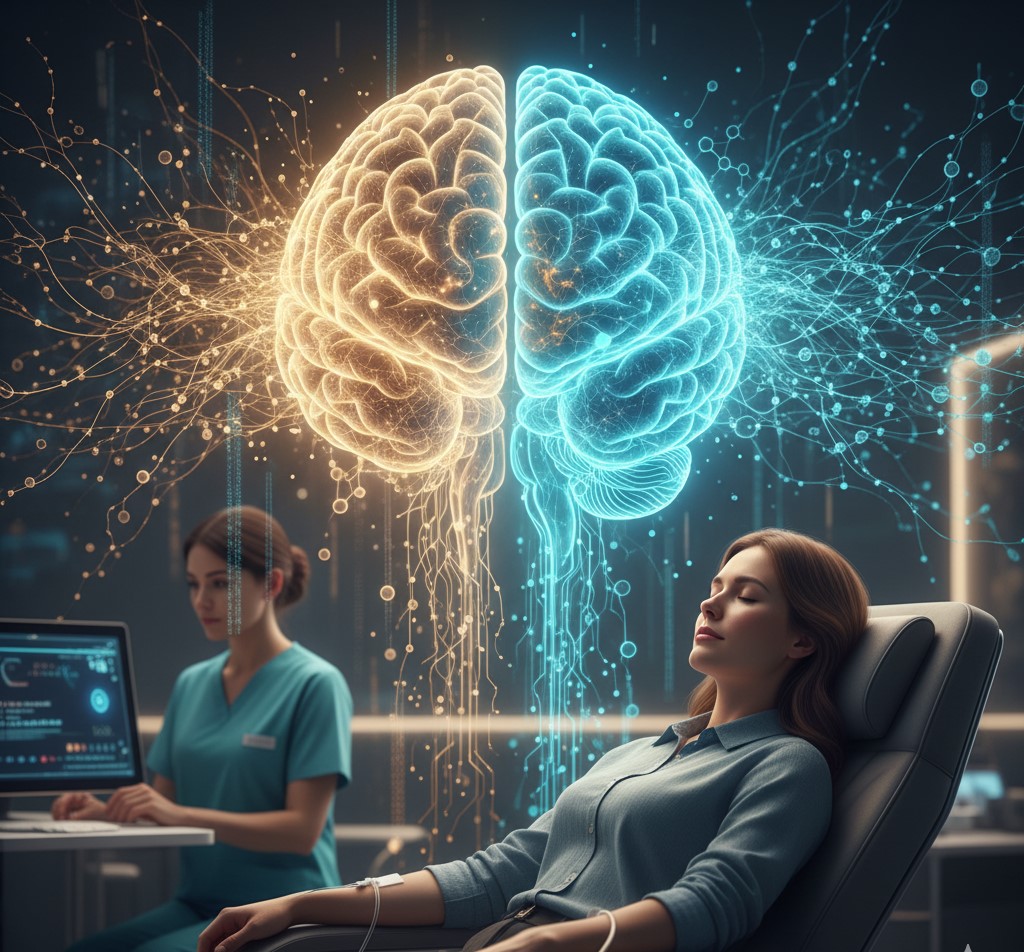
Ketamine acts primarily by blocking NMDA receptors, which are involved in transmitting pain signals and promoting central sensitization.
By inhibiting these receptors, ketamine reduces the amplification of pain signals in the spinal cord and brain. It also stimulates glutamate release and activates AMPA receptors, which trigger pathways linked to brain‑derived neurotrophic factor (BDNF) and mTOR.
These molecular cascades promote neuroplasticity – the formation of new synaptic connections – and may remodel circuits involved in chronic pain.
In animal models and human depression studies, new synapses appear within 12–24 hours after a single dose, while behavioural improvements begin within hours. Although migraine biology is distinct, the same surge of plasticity may help reset hyperexcitable pain pathways.
Beyond receptor blockade, ketamine dampens activity in the insula, thalamus, and other brain regions associated with pain perception.
In functional imaging studies of chronic pain, ketamine reduces activation of these areas and increases connectivity within pain‑modulatory networks.
These effects may explain why some people report immediate relief and a sense of “quieting” during infusions.
Patient experiences and emerging testimonials
People living with refractory migraines sometimes describe ketamine infusions as life‑changing.
In clinic reports, patients who had been bedridden for months regained the ability to work and engage socially after a series of infusions. Others note temporary relief lasting days or weeks, often describing the experience as a “reset” that quiets the storm of pain.
A small number of participants experienced only minimal improvement or discontinued therapy due to side effects such as dissociation or nausea. These varied experiences underscore the experimental nature of ketamine for migraines and the importance of personalized care.
Safety considerations and responsible use
While ketamine shows promise, it is not a first‑line therapy and carries risks. Side effects can include dissociation, hallucinations, increased heart rate and blood pressure, nausea and vomiting.
In the case series mentioned earlier, one participant experienced hallucinations that subsided when the infusion rate was lowered. Ketamine should be administered in a monitored setting by professionals trained in airway management and cardiovascular support.
Self‑administered or compounded ketamine products are not FDA‑approved for migraine treatment, and at‑home use without supervision may lead to unpredictable dosing, dependence, or harm. Long‑term safety is still unknown.
Repeated high doses have been associated with cognitive deficits and bladder issues in recreational users, while lower therapeutic doses have not been studied extensively over months or years.
Given these uncertainties, ketamine therapy should be considered only after conventional treatments have failed and should be integrated with a comprehensive management plan that includes neurology evaluation, lifestyle modifications, and preventive medications.
Integrating ketamine with holistic migraine care
Ketamine is most effective when combined with other strategies. Many clinicians recommend receiving the infusion in a calm environment, followed by integration coaching to help patients process the experience and maintain lifestyle changes.
Nutritional support, stress management, sleep hygiene, and avoidance of triggers remain essential components of migraine management.
For example, integrating neuroplasticity-promoting activities such as cognitive behavioural therapy, mindfulness and gentle exercise may help sustain the benefits of ketamine.
For those exploring ketamine treatment, it is important to choose a clinic with appropriate medical oversight.
Factors to consider include board‑certified physicians, nursing support, emergency equipment, and transparent communication about costs and expectations.
Prospective patients should ask about follow‑up care and whether the clinic offers integration services to support lasting change.
Daytryp’s own migraine treatment programs combine ketamine therapy with counselling and follow‑up support, ensuring that patients are not left to navigate their healing alone.
Ketamine is a powerful tool, but safety is paramount.
Future directions and research needs
Research on ketamine for migraines is still in its infancy. Ongoing trials are testing different infusion protocols, intranasal sprays, and oral formulations.
Scientists hope to identify optimal dosing schedules that maximize pain relief while minimizing side effects.
There is also interest in combining ketamine with other neuromodulators or behavioural therapies.
As studies expand beyond small case series and retrospective reviews, clinicians will better understand which patients are most likely to benefit and how long relief lasts.
Ready to reclaim your life?
Chronic migraines can steal joy and productivity, but emerging therapies offer hope.
Ketamine’s unique action on pain pathways and its ability to promote neuroplasticity make it a promising option for people who have exhausted conventional treatments.
If you’re curious about whether ketamine therapy could help your migraines, consult a qualified provider to discuss your medical history and treatment goals.
At Daytryp, we believe that science, compassion, and personalized care are the keys to healing.
Reach out today and take the first step toward a life with fewer headaches.







 Daytryp Health has taken
  The
The